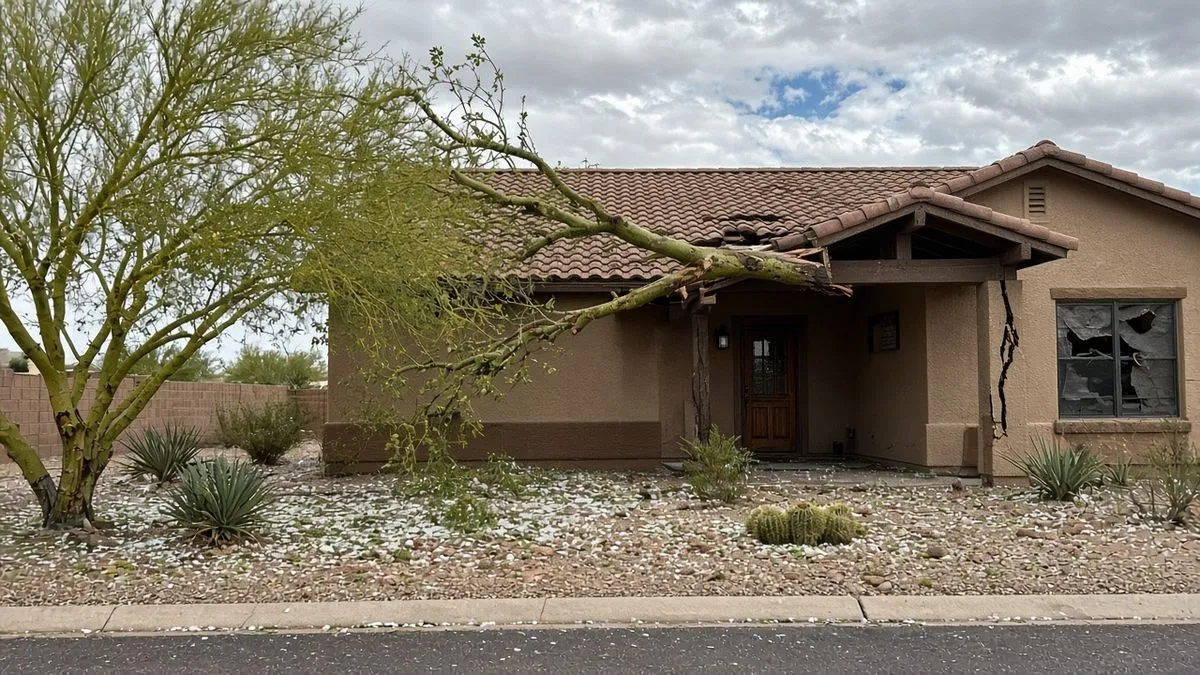
 AI-generated illustration, not an actual Hartigan project.
The October 20–21, 2026 storms left many Valley homeowners with more than branches to pick up. According to the National Weather Service Phoenix storm summary, one supercell crossed Chandler and Mesa on October 20, followed by another affecting Central and North Phoenix on October 21. Hail reached up to 2 inches, and the Phoenix storm produced winds exceeding 60 mph.
If your neighborhood was affected, a careful check can help you identify concerns before the next rain. You do not need to climb onto the roof or take anything apart. Start with what you can safely see, document it, and bring in qualified help when something looks wrong.
1. Put safety before cleanup
Wait until the weather has cleared and conditions are safe. Stay away from downed wires, damaged utility equipment, hanging branches, and trees resting on buildings. Report electrical hazards to the utility; call 911 for an immediate danger.
Keep people and pets away from damaged porches, patio covers, and carports. A cover that is still standing may have weakened connections. Do not walk underneath a sagging roof, try to straighten a post, or remove a branch supporting or pressing against a structure.
Inside, avoid rooms with sagging ceilings. Keep clear of water near outlets, lights, or electrical equipment. Do not enter a wet area to reach a breaker panel. Have the appropriate professional address those hazards first.
2. Check the roof from the ground
Walk around your home at a safe distance and use binoculars or your phone’s zoom. Look for:
- Broken, shifted, or missing roof tiles or shingles.
- Loose metal flashing around roof edges and penetrations.
- Debris on the roof or pieces of roofing material on the ground.
- New stains or damp patches on interior ceilings and upper walls.
A roof can have damage that is not visible from the driveway. Conversely, a mark or dent does not automatically prove storm damage or mean the entire roof needs replacing. A qualified roofing professional can evaluate the roofing system and distinguish visible symptoms from repair needs.
Do not climb a ladder or walk on the roof to get a closer look. Leave roof access, tarping, and repairs to people equipped to do that work safely.
3. Look closely at porches and patio covers
Phoenix homes often have covered outdoor spaces that deserve attention after strong winds or falling branches. From outside the affected area, look for leaning or cracked posts, a sagging beam, bent panels, or gaps where the cover meets the house.
Also note pulled-out fasteners, separated connections, and fresh cracking around attachment points. These are reasons to stop using the space until it is evaluated—not invitations to test whether it still holds weight.
If a tree has struck the cover or roof, coordinate qualified tree removal with the building assessment. Removing the tree without understanding the damage can create additional hazards.
4. Check stucco, windows, and drainage
Stucco and trim: Photograph new chips, impact marks, loose trim, and cracks, especially around doors and windows. Existing cracks may become more noticeable after a storm, so compare with older photos if you have them. Do not assume every crack was caused by hail.
Windows and doors: Look for cracked panes, damaged screens, bent frames, and water staining inside. Keep children and pets away from broken glass. Arrange safe temporary protection rather than handling unstable panes yourself.
Gutters and downspouts: Where installed, check from the ground for dents, loose sections, sagging, and disconnected downspouts. Note debris blocking drainage or water collecting near the house. Leave elevated cleanup to someone with appropriate equipment.
5. Document damage before repairs
Once the area is safe, take wide photos showing each affected part of the home, followed by close-ups from a safe position. Record the date you discovered the problem and where it is located. Include interior water stains and damaged belongings, not just exterior damage.
Keep original image files, videos, contractor estimates, receipts, and a simple log of calls and visits. Older photos can help show what changed. Never use an AI-generated illustration as evidence of actual damage.
Contact your insurer promptly to ask about your policy, reporting requirements, deductible, and next steps. Ask how to document necessary temporary protection and whether damaged materials should be retained. Coverage decisions belong to the insurer; a contractor cannot guarantee that a claim will be approved.
Do not delay necessary safety measures while waiting for a claim decision. Document emergency work and keep receipts.
6. Plan repairs with a clear written scope
Call a contractor when you see structural concerns, repeated leaks, damaged attachments, or problems involving several parts of the home. Roof damage may need a roofing specialist; damaged framing or a patio cover may require a broader building assessment and, where appropriate, engineering input.
Ask for a written scope explaining the proposed work, materials, exclusions, and any permit requirements. Review the contractor’s credentials and insurance, and avoid pressure to sign before you understand the plan.
Hartigan Construction Inc. can assess the damage and give you a repair estimate. To discuss your Phoenix-area home, call or text 480-791-6203 or visit www.hartiganconstruction.com.